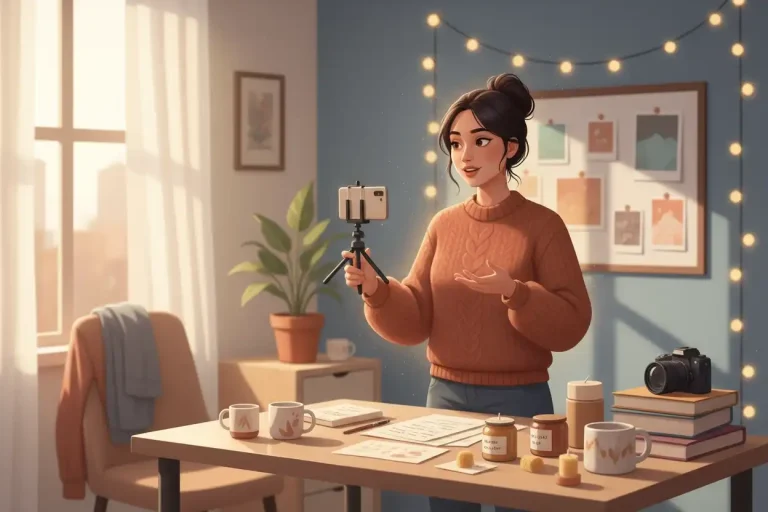
The internet promised to make everyone famous for fifteen seconds. What it delivered instead was millions of people locally famous for very specific things. A ceramicist with 20 000 fans can now out‑sell a pop star’s merchandise. A micro‑influencer reviewing fountain pens can dictate brand stock across continents. Fame got smaller — and more useful.
Micro fame used to sound like consolation; now it’s cultural muscle. The future of influence won’t belong to the biggest audiences, but to the most trusted ones.
The myth of the monolith
For decades, culture came top‑down. A handful of institutions decided what the world would watch, read, wear, and hum. Then the web quietly broke that ladder. Millions of vertical micro‑cultures sprouted where one broadcast tower used to stand.
Today’s map of taste looks less like Hollywood’s Walk of Fame and more like an anthill — millions of mini‑entrances leading to buzzing chambers of obsession. There’s no longer a singular mainstream; just overlapping streams, each with its own current.
So while media execs panic about “fragmentation,” small creators call it home. Fragmented culture is freedom disguised as chaos.
The power of a tight radius
Micro fame operates on intimacy. Small creators reply to DMs. They remember usernames. They host Discord trivia nights and know half the players by handle. That intimacy translates into ridiculous conversion rates marketers can only dream of.
There’s a magic ratio at play: lower follower count = higher trust density. A macro influencer markets; a micro creator recommends. Their word feels less like an ad and more like a friend’s text message. Culture flows fastest along trust lines.
And because algorithmic discovery keeps recycling those high‑engagement loops, niche creators often punch far above numerical weight — shaping conversations that bigger ones later echo.
How small creates big
Cultural trickle‑up is now normal. Micro‑communities pilot‑test what will eventually hit the mainstream. The slang, trends, and memes that dominate timelines usually germinate in small servers or side‑TikToks weeks earlier.
Think of it as cultural R&D. Mini labs of creativity experiment without risk, because there’s no crowd large enough to ridicule failure. Freedom from scrutiny breeds invention. By the time the wider world notices, the micro creators have already moved on to version 2.0.
The sustainability advantage
Smaller influence is also sturdier. Mega‑creators depend on algorithms, scandals, or sponsors staying generous. Micro‑creators depend on community goodwill — renewable energy if you manage it kindly.
A tiny, loyal fanbase is the internet’s equivalent of heirloom seeds: low‑maintenance, resilient, endlessly regenerative. Big fame burns fast; small fame composts into legacy.
Financially, the model works too. A creator with a thousand true fans making £10 each month earns a livable wage — no viral lottery required. The quiet middle class of creators is already proving the point: modest reach, full‑time income, zero paparazzi.
Culture’s new gatekeepers
When every community becomes self‑sufficient, cultural authority decentralises. BookTok sells novels faster than review supplements. Independent journalists on Substack set tech‑policy debates before mainstream editors catch up.
Power no longer sits in size but in specificity. Experts, hobbyists, librarians of passion — all shaping discourse through granular credibility. We may finally live in an age where nerds run the narrative.
And micro fame is less corruptible. The economics of massive visibility encourage spectacle; modest visibility encourages sincerity. It’s hard to posture when your fans actually know you.
The paradox of scale
Ironically, the more the internet expands, the smaller successful creators become. Audiences crave focus. Mega‑channels survive by mimicking micro ones — hosting intimate Q&As, spinning off private clubs, pretending to be small again. The algorithm engineered gigantism; the audience is engineering shrinkage.
“Relatable” beat “aspirational.” In an age of AI‑generated polish, imperfection reads as proof of life.
The psychology of enough
Micro fame also gifts creators something fame rarely allows: peace. A little validation goes a long way when you can still go grocery shopping anonymously. That freedom keeps creativity honest — you’re loved enough to feel seen, but not so famous you become paranoid about missteps.
It’s the fame sweet spot: the dopamine without the TMZ.
The takeaway
Small creators aren’t background noise to mainstream culture; they are the culture — its laboratory, focus group, conscience, and compass. Their modest reach produces massive resonance because it’s grounded in closeness.
Micro fame isn’t failure to grow; it’s refusal to dilute. The loudest revolutions begin in whispers, and right now those whispers are holding the mic.