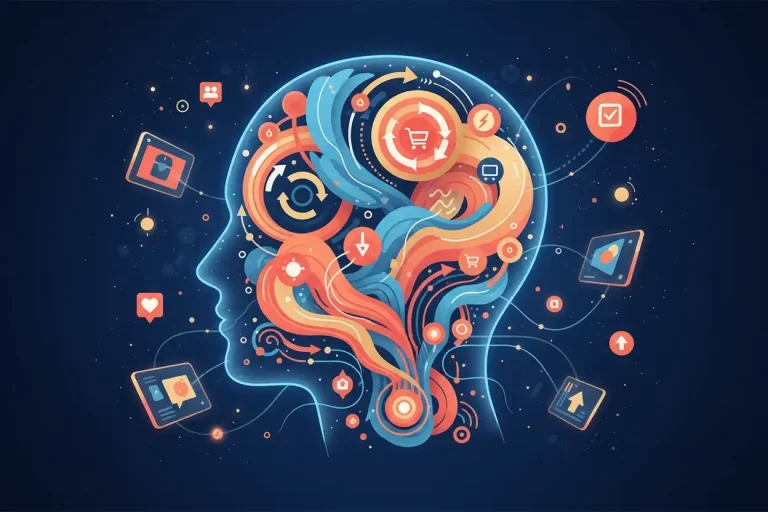
Marketing likes to imagine the customer as rational: weighing features, comparing prices, running quiet cost‑benefit scripts. But inside every buyer’s head lives something stranger — a brain designed for survival, not spreadsheets.
Behavioural marketing begins when we stop assuming people think and start studying how they feel their way to a decision.
1. The two‑system tug‑of‑war
Psychologist Daniel Kahneman framed it best:
- System 1 — fast, emotional, automatic.
- System 2 — slow, logical, effortful.
System 1 does most of the shopping. It’s the autopilot that recognises brands, shortcuts risk, and buys the same coffee every week. System 2 shows up later to justify it (“I deserve a treat”).
We like to think logos persuade; in truth, reflexes do.
2. Emotion writes logic’s scripts
MRI scans show the limbic system — our emotional core — lights up seconds before the rational cortex joins the party. Feeling precedes thought. Marketers who speak to pride, security, or belonging reach the brain’s decision centre directly.
That doesn’t mean manipulation. It means designing clarity around comfort: “You can trust this; others like you did.”
3. Shortcuts we can’t resist
Our brains run on heuristics — mental shortcuts that save energy. A few that silently steer purchases:
- Anchoring: First numbers set expectations. Show an expensive option first and the middle price feels safe.
- Scarcity: Limited stock triggers loss aversion. (Use honestly, never theatrically.)
- Social proof: We copy crowds because ancient survival favoured belonging.
Behavioural marketers study these biases not to exploit but to design paths that feel natural and fair.
4. Friction versus flow
Every click, field, or pause taxes cognitive load. When decision friction rises, impulse fades. That’s why one‑tap checkout and autofill aren’t gimmicks — they’re neuroscience in code. A frictionless path quietly preserves the customer’s System 1 momentum.
Yet total effortlessness isn’t always good: small pauses prevent regret. The art lies in balancing ease with agency.
5. Memory as marketing fuel
Neuroscience also says repetition = safety signal. The more we encounter a brand, the less threatening it feels. That’s the mere‑exposure effect in action. Every consistent touch builds familiarity until trust occurs by familiarity alone. Which is why careless rebrands confuse the subconscious; it has to relearn trust from zero.
6. Purchase as identity play
Every transaction whispers “I am this kind of person.” That stainless‑steel bottle isn’t a container; it’s a lifestyle badge for health, sustainability, aesthetic minimalism. We buy stories about ourselves. Behavioural marketing recognises this self‑signalling and writes messages that sound like mirrors, not megaphones.
Brands that help users narrate meaning outlast those that simply shout benefits.
7. Post‑purchase proof
The sale doesn’t end the psychology. Our brains crave post‑decision reassurance — confirmation bias seeking validation. Smart marketers feed it ethically: onboarding warmth, thank‑you sequences, social belonging. This converts cognitive bias into loyalty loop instead of buyer’s remorse.
Satisfaction is just defensible decision‑making dressed as delight.
8. Ethical awareness
Understanding behaviour grants power, but unexamined power quickly corrodes credibility. When marketers use bias without empathy, short‑term gains invite long‑term distrust. The goal isn’t to hack the brain; it’s to design alignment between what helps customers and what grows revenue.
Influence becomes integrity when intent stays transparent.
9. From function to feeling
A helpful test: describe your offer using verbs about emotion instead of nouns about features.
- Not “CRM software.” Say “peace of mind about follow‑ups.”
- Not “fitness plan.” Say “confidence before the meeting.”
Feelings are functions translated for humans.
The takeaway
People rarely think their way to a purchase; they sense, shortcut, and rationalise afterward. Knowing this doesn’t cheapen marketing — it humanises it. Behavioural insight reminds us to design with empathy: respect attention, reduce friction, and meet the subconscious halfway.
Because the brain behind the buy isn’t your enemy; it’s your audience, half‑awake and hoping you’ll make the decision easy and kind.