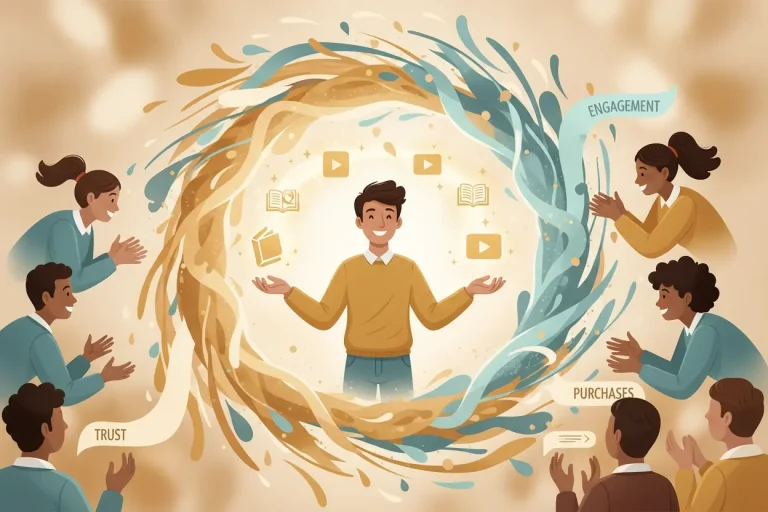
“Give a little, get a lot” isn’t just good manners—it’s marketing science. The Principle of Reciprocity explains why a free sample, guide, or trial can do more for sales than the hardest pitch. When people receive something of value, they feel compelled—consciously or not—to return the favor. In marketing, that return often shows up as loyalty, sign-ups, or full-price purchases.
This guide explores the psychology, how it drives responses, proven ways to apply it, tools, ethical balance, creating loops, and final thoughts. By the end, you’ll harness reciprocity to boost sales through genuine giving. Let’s give to get.
Step 1: The Psychology of Giving First
Reciprocity sits at the core of human cooperation. Robert Cialdini, author of Influence, called it a universal social rule: people repay positive actions with positive actions. In today’s cluttered digital landscape, generosity has become a strategic differentiator.
According to a 2025 marketing study, free-value experiences such as webinars and downloads can increase conversion intent by up to 45%, while post-trial upgrades average a 32% uplift. The reason is simple: when brands give before asking, they shift the dynamic from transaction to trust.
Step 2: How Reciprocity Drives Behavioural Response
Neuroscientists link reciprocal behavior to a dopamine release—the same chemical that rewards social belonging. When a user receives a helpful checklist, free newsletter, or free-trial access, their brain logs the brand as “trustworthy.” The next CTA (“Book a demo,” “Try Premium”) then feels natural instead of pushy.
There are three key kinds of reciprocity in marketing:
- Generalised Reciprocity: You give something now without asking for immediate return (e.g., free blog content).
- Balanced Reciprocity: Both sides exchange value clearly (e.g., lead magnets, referral perks).
- Negative Reciprocity: A pushy or manipulative form that erodes credibility—avoid it.
Ethical reciprocity always belongs in the first two categories.
Step 3: Proven Ways to Apply Reciprocity in Marketing
Freemium Trials that Teach Value:
Offering core features for free lets users experience genuine benefit. Dropbox’s early growth exploded after it offered shared storage bonuses for referrals—a win-win exchange rooted in reciprocity.
Educational Content that Solves Problems:
Free, well-researched content such as buyer guides, templates, or how-to posts establishes expertise. Readers who learn from you first are 70% more likely to subscribe or purchase later.
Giveaways with Purpose:
Small, useful giveaways (like Notion templates or design assets) foster goodwill. The secret: relevance. Give something aligned with your paid product so reciprocity ties directly to customer intent.
Referral and Loyalty Bonuses:
Programs rewarding both the referrer and their friend balance reciprocity. Dropbox and Revolut mastered this by rewarding both sides equally.
Generous Onboarding:
Offer live set-up calls, resource libraries, or limited 1-to-1 support for new users. The unexpected gesture builds immediate gratitude and dramatically reduces churn.
Step 4: Tools to Build Reciprocity into Your Strategy
- HubSpot CRM & Marketing Hub: Automates free-content delivery and tracks when users repay engagement.
- ConvertKit or Beehiiv: Design email funnels that educate first, sell second.
- Userpilot: Delivers freemium onboarding flows and in-app education messages for SaaS teams.
- ReferralCandy: Runs double-sided referral programs with transparent incentive rules.
- Typeform + Notion: Combine survey giveaways or free templates to gather data and goodwill simultaneously.
Step 5: How Much “Free” Is Enough?
The art of reciprocity lies in giving small but useful—not lavish or misleading. Provide something that solves a real problem quickly, then invite users deeper. Harvard Business Review’s 2025 findings show that micro-content (under 10 minutes to consume) leads to higher retention than long, gated e-books.
Framework for balance:
- Deliver useful value once → No strings.
- Earn trust through consistency.
- Invite reciprocity gently (“If this guide helped, share it or subscribe for more”).
Step 6: Ethical Reciprocity: Where Generosity Meets Strategy
Misused reciprocity backfires. Overly transactional freebies (“Free ebook—but give us your life story”) spark cynicism. According to CJPI’s 2025 analysis, the golden rule is clarity: be open about why you’re giving. People appreciate generosity; they dislike bait-and-switch.
Reciprocity should build long-term connection, not short-term conversion. Brands that continually give authentic help without pressure experience stronger lifetime value and brand advocacy.
Step 7: Creating a “Reciprocity Loop”
Successful brands turn one act of giving into a cycle:
- Free content builds trust.
- Trust leads to subscription or purchase.
- Positive experience motivates users to share feedback or referrals.
- Each new share becomes another gift to the next customer.
This loop compounds goodwill and visibility simultaneously—generosity as growth engine.
Wrap-Up: Final Thoughts
Reciprocity isn’t a marketing trick; it’s human nature leveraged wisely. Give people genuine value first—a solution, an insight, or a smile—and they’ll give you something harder to buy: trust.
In 2025’s skeptical landscape, the brands that win won’t shout loudest; they’ll give first and sell later. Because in business, as in life, the surest way to earn a conversion is to deserve it.