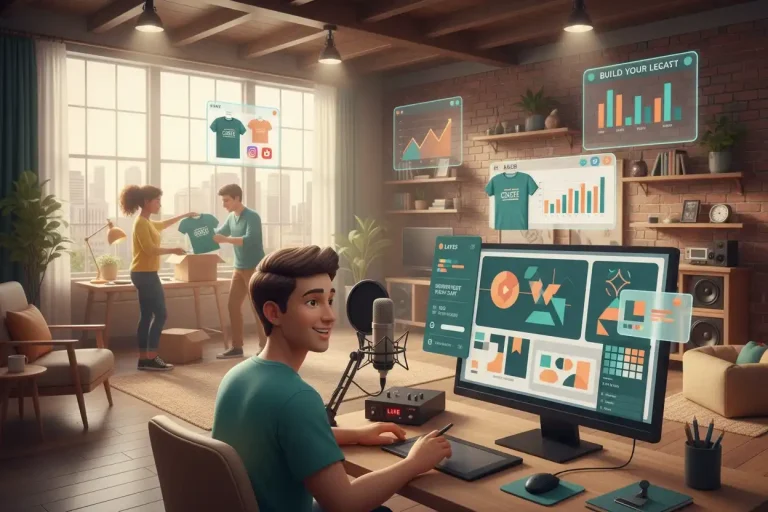
Once upon a very 2012 internet, “content creator” meant a teenager in a bedroom making videos for free Wi‑Fi. Today it means a professional with revenue streams, analytics dashboards and a satin‑finished media kit. The transformation from hobbyist pastime to genuine commercial sector has been so fast that most economies haven’t caught up.
But look closer and you’ll see that behind the tech jargon, this is simply entrepreneurship in its newest shoes. The Creator Economy is the small‑business revolution of the 2020s — only the storefronts are feeds, and the tills ping in DMs.
From passion projects to P&L statements
Ten years ago creators chased followers; now they chase margins. Platforms like YouTube, Patreon, Substack and TikTok have turned creativity into infrastructure. Tools automated what agencies used to charge retainers for: distribution, data, audience segmentation.
The fundamental model mirrors traditional business: build product (content), acquire customers (followers), diversify income (ads, merch, memberships), manage costs (time, burnout, bandwidth).
Except unlike old‑school SMEs, creators rarely need seed capital or a lease — they need time, consistency, and Wi‑Fi strong enough to upload at 1080p.
And while gatekeepers sleep, a new middle class quietly forms: writers, illustrators, gamers, educators, fitness instructors and finance nerds earning sustainable livelihoods on their own terms.
Why audiences switched allegiance
For decades audiences tolerated polish and distance. Now they prize proximity. A creator talking directly into a phone lens feels more real than a brand talking through an agency. Viewers adopt them like friends with better lighting.
Trust has flipped direction: individuals borrow credibility from sincerity, not from scale.
That’s why brand accounts struggle for engagement even with six‑figure budgets, while a creator with a dog and a ring‑light moves products by simply existing authentically. The micro‑influencer who looks like you influences like you.
The creator‑audience bond is less transactional and more parasocial, but it fuels modern retail behaviour. The endorsement isn’t an ad; it’s an anecdote.
The economics of one‑person media companies
A single creator can now run an operation rivaling small agencies thanks to an arsenal of software: scheduling tools, AI caption generators, design templates, CRMs for community management. These reduce friction so imagination becomes strategy, not a side effect.
Revenue sources have fragmented beautifully:
- Platform share (YouTube AdSense, TikTok Creator Fund)
- Direct support (Patreon, Ko‑fi, Buy Me a Coffee)
- Brand collaborations (sponsorships, licensed content)
- Product lines (merch, digital courses, newsletters)
It’s not uncommon for a creator to juggle five or six income streams, each modest alone but powerful in aggregate. Think of it as the gig economy with personal equity.
The hidden costs of independence
Freedom isn’t free. Creators trade predictability for autonomy. No sick pay, no HR department, no IT help when the mic dies during a livestream.
The mental bandwidth tax is steep: you’re simultaneously producer, accountant, marketer and therapist. Burnout statistics climb as algorithms demand relentless visibility. The unofficial motto of the Creator Economy could be “post or perish.”
And with platform volatility — a tweak to the algorithm, a new policy — livelihoods can wobble overnight. Diversification isn’t nice‑to‑have; it’s survival strategy.
Why traditional businesses are watching closely
Small businesses now study creators the way creators used to study brands. They envy the directness of that creator‑to‑audience link and the speed of feedback loops. Meanwhile, creators are adopting business hygiene: hiring editors, registering as limited companies, building teams around content IP.
The lines blur. Today’s baker could be tomorrow’s baking influencer; today’s influencer could be launching a physical bakery. Distribution flows both ways.
The bigger picture: a cultural shift
This new economy isn’t fringe; it’s a redefinition of labour. Creative independence is replacing corporate loyalty as a career aspiration. You don’t dream of a corner office; you dream of a community that pays rent.
It’s capitalism meets craft, mediated by wi‑fi and charisma.
The next decade will decide whether platforms or people hold the power. But one thing’s settled: creativity is no longer treated as leisure — it’s labour, and it deserves receipts.
The takeaway
The Creator Economy isn’t a trend; it’s a structural rewrite. Where the industrial revolution mechanised muscle, this one monetises personality. It’s scrappy, unpredictable and utterly human — which is precisely why it’s winning.
Future generations may not call themselves entrepreneurs or freelancers at all. They’ll simply say, “I make things people like — and I get paid for them.” That’s the new small business.