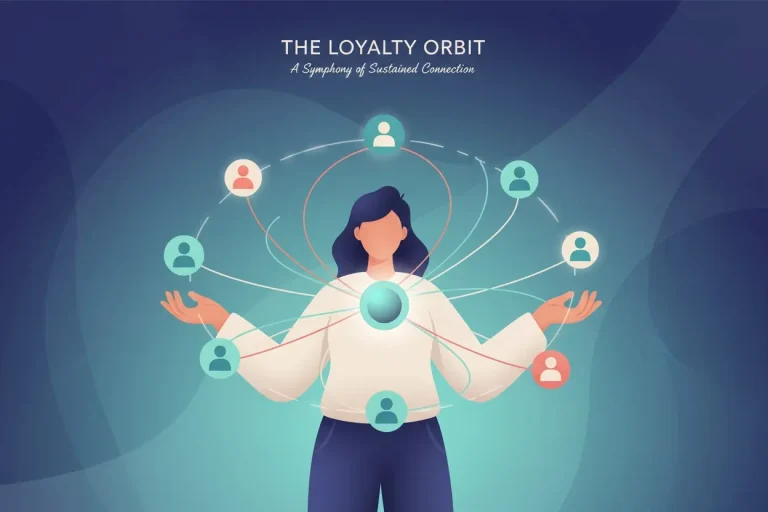
Acquisition turns heads; retention pays salaries. The first download or sign‑up is an applause break — flattering but fleeting. What sustains a start‑up isn’t novelty; it’s attachment. And attachment, inconveniently, lives more in psychology than in product roadmaps.
Getting people to stay means understanding why humans stay anywhere.
The myth of infinite funnel
Founders treat users like a pipeline: pour leads in at the top, magic at the bottom. But loyalty isn’t plumbing; it’s emotion. Retention happens when utility evolves into identity — when using your product slightly improves how customers see themselves.
Think Starbucks cups scribbling names: not coffee, community. Apple’s “ecosystem” isn’t technical; it’s belonging. Even SaaS products can trigger ego rewards: progress bars, streaks, inside jokes in release notes. The physics of retention is the psychology of affirmation.
1. Stop chasing satisfaction; chase habit
A satisfied user might still forget you exist. A habitual one reorganises life around you. The goal is default status — your product becomes the reflex answer to a recurring need.
Psychologists call it contextual cueing: pair action with environment until behaviour runs on autopilot. Slack’s desktop pings, Duolingo’s daily owl, Notion’s “good‑morning” pages — all gentle nudges training the same circuit.
Rule of thumb: retention occurs when absence hurts more than presence delights.
2. Map the “Aha → Oh, right” loop
Every product has an Aha moment, the instant value clicks. Great retention adds an Oh right loop — the periodic reminder that value’s still there.
Example: a fitness app celebrates your tenth workout (Aha) and emails you creeping stats a month later (Oh right). Few users quit services that continually replay their first success.
Design for re‑enchantment. Nostalgia keeps customers better than nudges.
3. Give users progress to lose
Humans hoard progress. Researchers call it the endowment effect — we over‑value what’s partially complete. LinkedIn’s 70 percent‑filled profile, language‑learning streaks, loyalty levels — each transforms effort into sunk cost.
Retention loves scoreboard psychology. When people can see how far they’ve come, they’ll rarely delete the evidence.
4. Community turns tools into tribes
No push notification outperforms a friend who asks, “Are you coming back?” Building community multiplies retention by peer accountability. It’s why Peloton users pedal longer and indie‑software Discords buzz nightly.
Community doesn’t always require chat servers; sometimes it’s quiet continuity — quarterly webinars, user‑feature showcases, brand reps conditioned to recognise faces, not tickets.
Your real moat isn’t the code; it’s the conversations surrounding it.
5. Emotionally honest churn
Support teams often exit customers like bad dates: “Sorry to see you go.” Businesses that ask why without theatre learn faster. Exit interviews, cancellation flows inviting feedback, quick “pause not cancel” options — they all transform departure into data.
Treat churn discussion as psychological safety research, not interrogation. Users who feel heard mid‑goodbye are easier to re‑win later.
6. Retention begins in onboarding
Onboarding isn’t orientation; it’s seduction. You’re not teaching features, you’re scripting first success. Every extra cognitive step costs dopamine.
Airbnb didn’t tell hosts how to list homes; it walked them through photos until the preview looked good enough to post. Momentum = confidence = continuation.
Most drop‑offs aren’t lack of interest, they’re early embarrassment. Design friction out, pride in.
7. Predictive empathy beats reactive support
By 2025/26, retention software can anticipate restlessness. Tools like Chameleon, Amplitude, and Vitally spot patterns — declining session times, unanswered messages — signalling drift before goodbye emails appear.
Use data subtly: a check‑in humanises automation (“We noticed you haven’t uploaded in a while — need help or simply busy?”). The difference between helpful and creepy is pronoun choice; always lead with empathy, not insight.
8. Measure feelings sideways
Traditional metrics — DAU, MAU, churn — tell outcomes, not motives. Augment them with sentiment indicators: NPS trends, qualitative tags from support logs, revisit frequency of your “wow” features.
Plot narrative with numbers. When the data dips, ask “what emotional promise did we break?” Retention curves are biographies of trust.
The takeaway
Retention resides at the intersection of design, data, and dignity. Users leave when products stop affirming their effort or self‑story. They stay when each interaction quietly says “you still make sense here.”
The cheapest growth strategy of all time is empathy — precisely delivered and repeatedly confirmed. Acquire loudly if you must; retain quietly forever.