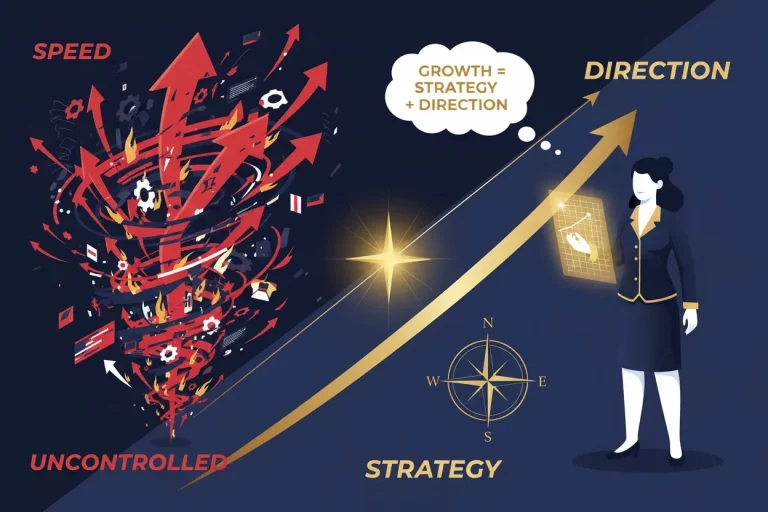
Once upon a pitch deck, every founder swore allegiance to one god: growth. “Scale fast, fail fast, pivot faster.” Valuation was virtue; speed was salvation. But after a decade of hockey‑stick PowerPoint slides crashing into real‑world walls, the cult of growth hacking is evolving. Turns out, “grow” isn’t a goal — it’s a by‑product of getting almost everything else right.
The invention of the growth gospel
In the early 2010s, after the social‑media gold rush, growth hacking became a secular religion for tech. It promised exponential users without proportional budgets: A/B testing, funnel tweaks, virality as vocation. A generation of marketers chased numbers like prophets interpreting engagement analytics.
The logic was intoxicating: find a trick, ignite virality, raise a series‑A before anyone sobers up. For a while it worked — venture money hid fragility. But as interest rates rose and hype deflated, the industry caught an inconvenient revelation: growth masking mediocrity still equals mediocrity.
The real difference between growing and scaling
Growth adds; scaling multiplies. A company can increase revenue, headcount, and chaos simultaneously — that’s growth. Scaling, by contrast, means adding output while input holds steady. It requires process, product‑market fit, and often patience — three attributes rarely captured in virality charts.
The paradox: the faster you chase growth, the slower you learn what actually sustains it. Speed amplifies whatever you already are — clarity or confusion. Choose wisely.
Product‑market fit: the unsexy miracle
True growth happens when product solves problem so cleanly that marketing feels like punctuation rather than persuasion. Dropbox’s early referral loop wasn’t magic — it was alignment. Customers genuinely benefited by inviting friends. The tactic thrived because the product fit human behaviour, not because someone wrote “hack” in the job title.
Start‑ups still try to brute‑force virality without that precondition, mistaking noise for demand. The first rule of growth hacking club: if you need to hack it, you probably haven’t earned it yet.
Vanity metrics: today’s sugar high
Followers, downloads, sign‑ups — the digital calories of start‑ups. They satisfy dashboards but starve strategy. Sustainable ventures measure retention, referral, and revenue per repeat user. Growth worth celebrating is cumulative, not explosive.
Founders addicted to virality burn through audiences like lighter fuel. Better to make a slow‑burning fire than a viral bonfire that leaves ash and unpaid invoices.
Culture as accelerator
The overlooked edge in scaling isn’t code; it’s company chemistry. Teams built on psychological safety iterate faster because they admit mistakes sooner. “Fail fast” wasn’t meant as bravado; it was meant as permission.
In 2025’s startup climate — Lean now translated into “cash‑efficient empathy” — internal culture is a competitive moat. A healthy team ships better than a heroic one.
Sustainable marketing > constant experimentation
Growth hacking romanticised perpetual testing: “We ran 47 landing‑page variants this week.” Now efficiency favours depth. The best start‑ups are blending data with editorial discipline, building brand gravity. Customers trust consistency over cleverness.
A modern hack? Post transparency updates. Share roadmaps, revenue milestones, even flops. Audiences reward vulnerability more than virality.
Marketing as sincerity wasn’t in any textbook, but it works astonishingly well.
The money mood swing
Venture capital has gone cost‑conscious. The new pressure isn’t to grow at any cost but to earn more than you burn. Investors expect unit economics that look less like art projects. Start‑ups obsessed with growth metrics will struggle; those obsessed with sustainable margins will inherit tomorrow’s term sheets.
In the next cycle, bragging rights belong to founders who scaled responsibly — those rare sentences containing both numbers and sleep.
Practical sanity checklist for 2025/26 founders
1. Obsess over retention before reach.
2. Document systems early; speed hides inefficiency.
3. Hire for communication when cash forbids perfection.
4. Use data to confirm, not to decide — intuition still drafts the first hypothesis.
5. Build community before campaign; users become the only affordable marketing department.
If any “hack” endures, it’s curiosity paired with patience.
The takeaway
The modern start‑up cliché taught us that growth forgives all. It doesn’t. Growth amplifies all — including your worst habits.
The future belongs to disciplined builders who treat metrics as mirrors, not medals. Growth is evidence of health, not the definition of it.
Hack less. Understand more. Build quietly. And let scaling happen as the side effect of substance.