Marketers love five-star ratings—but consumers don’t. In an era of fake testimonials and glossy perfection, flawless feedback feels suspicious. Research shows that a mix of positive and negative reviews builds more credibility and lifts conversion rates than only glowing praise.
Negative reviews reassure people that your business is real, responsive, and transparent—and that’s exactly what modern buyers want.
This guide explores the psychology, why bad boosts good, ideal ratios, turning feedback into fuel, tools, ROI measurement, and the transparency edge. By the end, you’ll embrace negatives to build trust that sells. Let’s review wisely.
Step 1: The Psychology Behind “Perfect = Fake”
Humans instinctively distrust perfection. A 2025 Fera report found that 68% of consumers don’t trust brands without any negative reviews, and 95% suspect censorship if ratings are flawless. When we see minor criticism alongside strong overall ratings, our brain reads it as honest, not harmful.
This phenomenon comes from negativity bias—our brains give more weight to negative information than positive. So when shoppers find a balance (a few low stars among many high ones), it triggers a sense of authenticity.
Step 2: Why the Bad Boosts the Good
A recent UpFirst survey revealed that 77% of consumers find negative reviews “extremely” or “very” influential when evaluating a purchase. Yet the same study showed these reviews can increase conversions by up to 85% when brands respond quickly and respectfully.
Negative feedback demonstrates three things buyers subconsciously crave:
- Transparency – The brand has nothing to hide.
- Accountability – Issues are acknowledged and addressed.
- Relatability – Consumers see that mistakes happen and can be resolved.
Brands that respond publicly to criticism outperform silent competitors because they prove active customer care—something 53% of shoppers expect within a week.
Step 3: How Many Negative Reviews Should You Have?
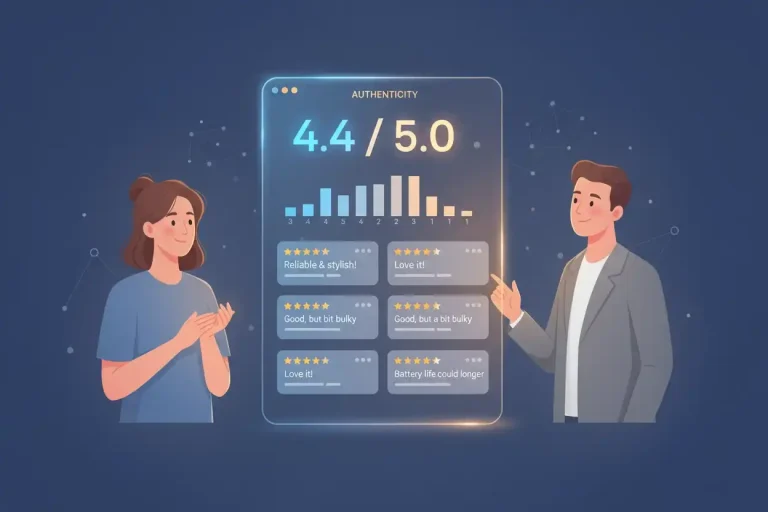
Too few = fake. Too many = fear. The sweet spot usually falls between 3–5 negative reviews per 100 total. It mirrors natural variation while keeping your star average around 4.3–4.7—the psychological trust peak where conversions are highest.
A Trustpilot analysis found that products rated 4.2–4.5 stars convert better than those at 5.0, because moderate imperfection seems realistic. Beyond 4.8, skepticism creeps in; below 3.5, hesitation dominates.
Step 4: Turning Bad Feedback into Brand Fuel
Respond, Don’t React:
Thank customers, acknowledge the problem, and show constructive resolution steps. According to BrightLocal, buoyancy in tone and professionalism can recover 70% of lost prospects.
Highlight Recovery Stories:
Turn “We messed up” into “Here’s how we fixed it.” Case-study formats or video replies broadcast accountability while reassuring new buyers.
Segment Criticism:
Use feedback analysis tools to identify recurring weaknesses. Many complaints may stem from communication gaps, not poor quality—one survey found 37% of bad reviews come from unclear messaging, slow replies, or poor follow-up.
Encourage Balanced Reviews:
Invite honest feedback rather than begging for 5 stars. Users appreciate the freedom to share nuance, and verifying real purchases adds weight to credibility.
Step 5: Ethical Review Management Tools
- Trustpilot Business: Consolidates authentic global reviews with verified-buyer tags.
- Fera AI: Automates post-purchase review requests and filters for balanced tone.
- WiserReview: Collects reviews via email/SMS and manages responses centrally.
- Birdeye: Monitors sentiment trends across Google, Facebook, and niche directories.
- ReviewTrackers: Flags negative comments instantly to allow timely responses.
Step 6: Measuring the ROI of Imperfection
Better Engagement, Higher Ranking:
Google values consistent, genuine engagement. Responded reviews (even negative) can lift search visibility by 12–15 percent because they signal active business management.
Improved Customer Retention:
Handled respectfully, complaints convert into loyalty catalysts. Data shows that recovery interactions—where an issue is resolved well—yield 60–75% repeat purchase probability, outpacing new customer acquisition by far.
Benchmarking Authenticity:
Track sentiment distribution rather than chasing averages. Aim for:
- 80–90% positive
- 8–15% neutral or minor negative
- < 5% severe complaints
This ratio keeps your review ecosystem trustworthy and responsive.
Wrap-Up: The Transparency Advantage
Customers aren’t fooled by perfection—they’re comforted by humanity. A few imperfect stories make the glowing ones believable. The smartest brands showcase balance: positive experiences framed by moments of learning.
In 2025, credibility doesn’t come from chasing stars—it comes from earning trust in the grey areas between them.